An AI checker is a software tool designed to examine written content for patterns that may be associated with machine-generated text. As generative AI becomes part of everyday writing, people increasingly want a practical way to ask whether a passage appears human-written, AI-assisted, or difficult to classify. That makes an AI checker useful for screening, quality control, and fact-checking workflows, but it should not be confused with a perfect authorship test.
How an AI checker works
Most AI checkers analyze statistical and linguistic signals rather than “seeing” who typed the words. A system may examine sentence predictability, variation in sentence structure, repeated phrasing, vocabulary patterns, and other characteristics learned from examples of human and machine-generated text. Different detectors use different models and thresholds, so two tools can reach different results on the same document. For that reason, a useful workflow treats the output as evidence to review, not a final verdict that settles authorship by itself.
Why context matters
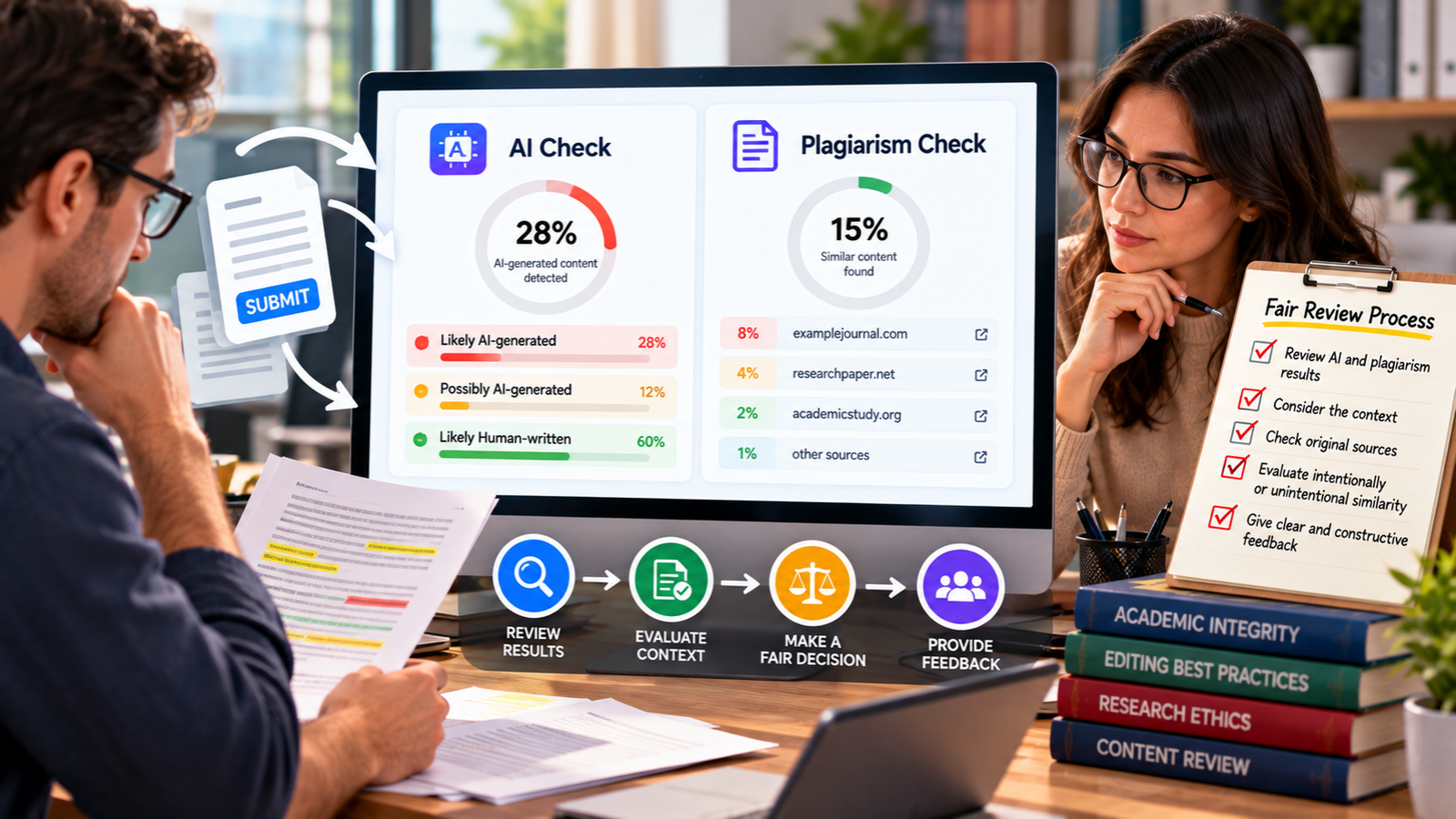
Context can change the meaning of a detection result. Short passages contain fewer signals, edited AI-assisted writing can look more human, and highly formulaic writing can resemble generated text even when a person wrote it independently. A checker is therefore most useful when the result is considered alongside drafting history, source notes, citations, revision records, or other relevant evidence. This is especially important when an AI check affects a grade, employment decision, publication decision, or reputation.
AI checker versus AI detector
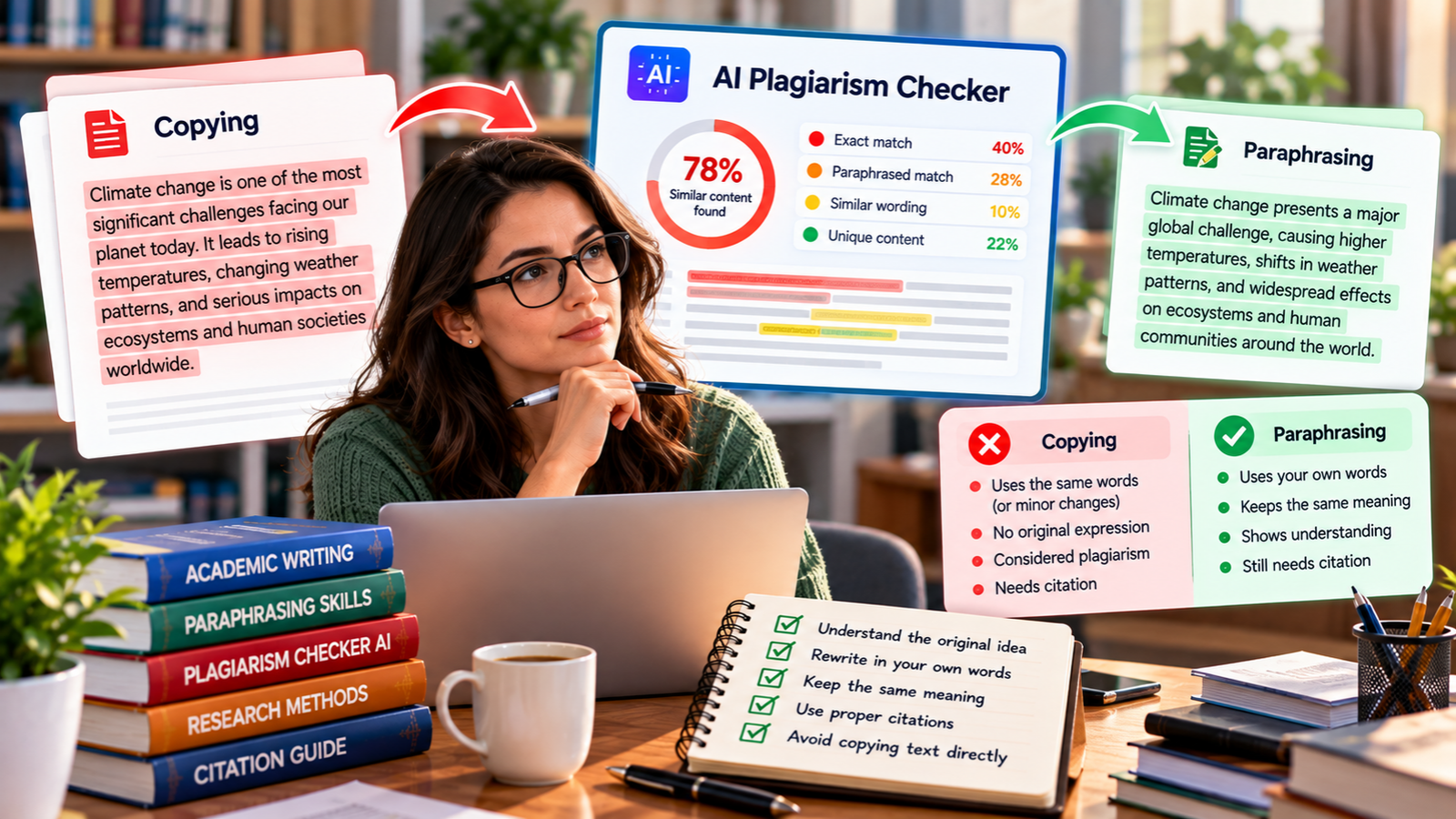
The phrases “AI checker” and “AI detector” are often used interchangeably, but users may expect different features from each. An AI detector commonly focuses on estimating whether text resembles generated output. An AI checker may be a broader product category that combines AI detection with plagiarism screening, writing analysis, source verification, or other checks. When choosing a tool, look beyond the label and review what evidence the product actually provides.
Where an AI checker fits into fact checking
AI detection and fact checking answer different questions. An AI checker asks about the likely origin or characteristics of text. A fact checking tool asks whether a claim is supported by available evidence. A passage can be entirely human-written and still be false, while an AI-generated statement can accidentally be accurate. Strong verification workflows keep these tasks separate and then combine the findings carefully when content includes both authorship and factual claims.
Practical tips for using one
Use an AI checker as a screening step. Save the original material, preserve the source or document history, review the detector explanation, and look for corroborating evidence before making a consequential decision. For higher-stakes use, compare results across methods rather than treating a single percentage as proof. Transparency about uncertainty is part of good verification practice, because it helps people distinguish “this looks suspicious” from “this has been demonstrated to be false.”
Common mistakes when using an AI checker
A common mistake is treating a detector score as a direct measurement of authorship. Another is scanning a tiny excerpt and applying the result to an entire document. Users should also avoid changing the meaning of a passage simply to make it look less detectable. The purpose of screening is to understand a risk signal, not to game the detector. Preserve the original text, review the context, and use independent evidence when the decision matters.
Practical takeaway
Use an AI checker as the first step in a review chain. Record the result, inspect the passage, compare it with the surrounding document, and then decide whether additional evidence is needed. This keeps the process proportionate and helps users avoid both false accusations and false reassurance.
Conclusion
A practical verification process starts with the question behind the content, not the label attached to it. When using ai checker in a real workflow, keep the original material available, preserve the date of the check, and separate facts from interpretation. For source-based questions, prioritize documents, direct statements, original recordings, reputable reporting, and other evidence that can be inspected. For AI or plagiarism questions, remember that a detection signal answers a narrower question than factual verification. For social media and news, compare the exact wording of the claim with what the underlying source actually says. If evidence conflicts, document the conflict instead of hiding it. If evidence is missing, use an uncertain status rather than inventing confidence. This approach makes ai checker more than a one-click answer: it becomes part of a transparent verification process that readers, editors, teachers, and content teams can understand and repeat. The ultimate goal is not simply to produce a verdict. It is to reduce avoidable errors, slow the spread of unsupported claims, and help people make decisions using evidence that is clear, traceable, and appropriate to the situation.
Frequently Asked Questions
Can an AI checker prove that a person did not write a passage?
No. Detection systems estimate patterns associated with AI-generated writing; they do not observe the full writing process or provide conclusive proof of authorship.
Is an AI checker the same as a fact checker?
No. An AI checker focuses on text-generation signals, while a fact checker evaluates claims against evidence. They can complement each other but should not be treated as the same tool.