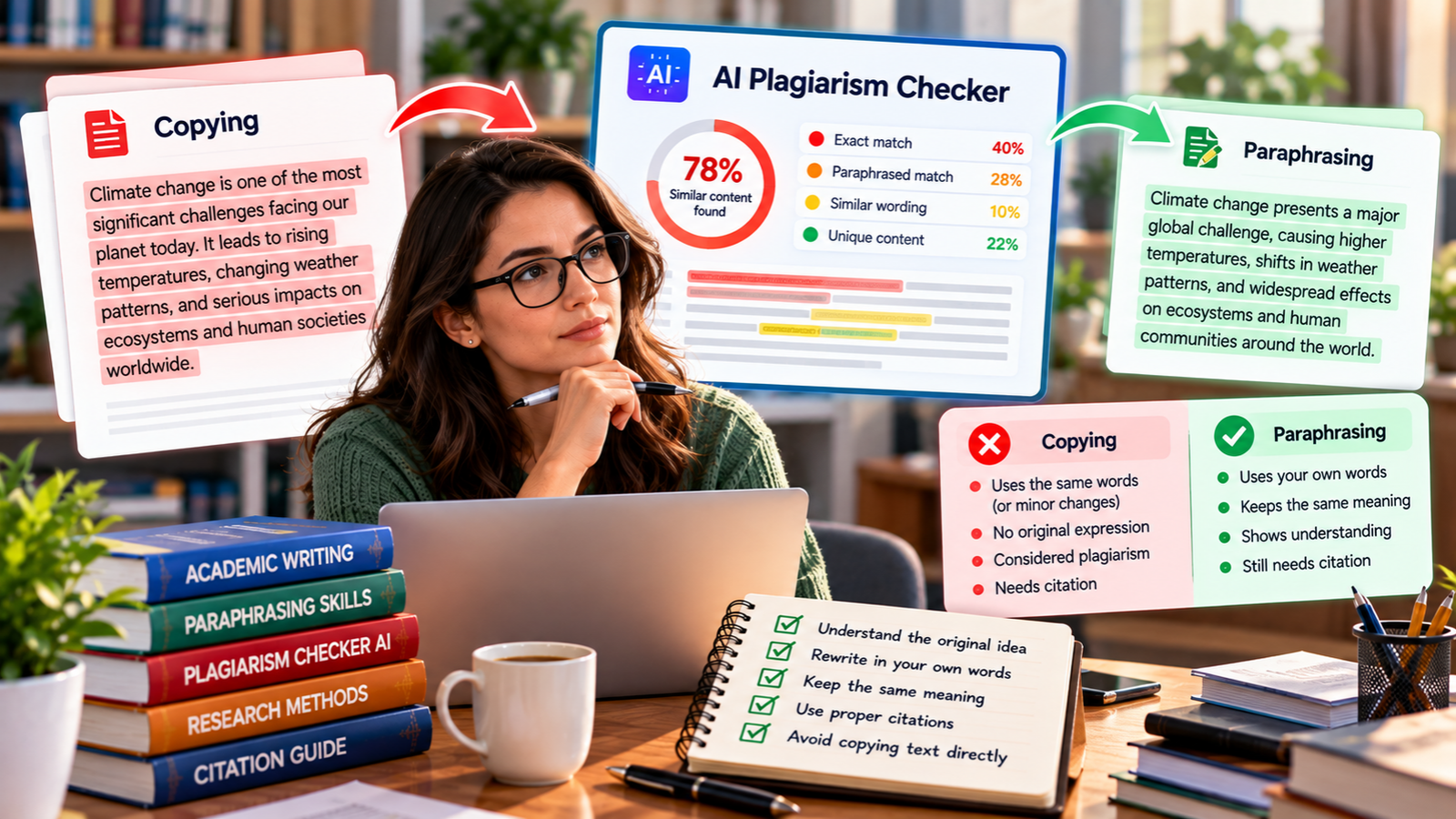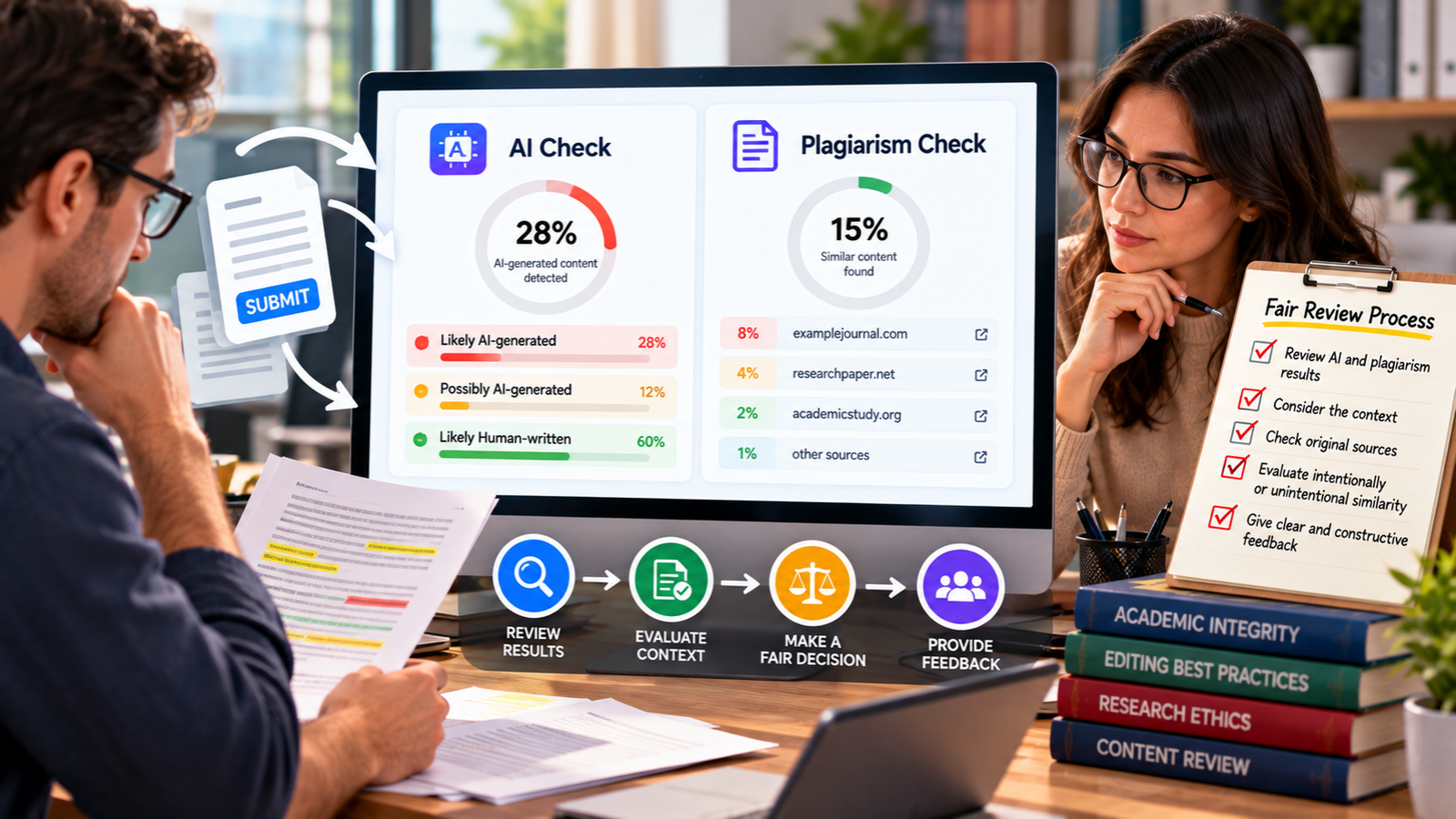
A plagiarism checker AI tool may combine two popular forms of content analysis: similarity detection and AI-generated text detection. That combination is convenient, but it can also create misunderstandings. Similarity asks whether wording resembles other sources. AI detection asks whether writing patterns resemble generated output. A sound workflow keeps both findings visible and interpretable.
Similarity is about sources
A plagiarism checker searches for matching or closely related text. A high similarity score can be caused by copied wording, quotation, common phrasing, references, templates, or standard terminology. Reviewers should open the matched source and assess context rather than assuming every highlighted phrase is problematic. Source attribution is often the deciding factor.
AI detection is a different signal
AI detection estimates whether the wording contains patterns associated with language-model output. It does not identify a specific model with certainty and does not establish who wrote the document. That distinction becomes important when a student used a permitted editing tool or when a writer revised a generated draft extensively. The report should therefore be treated as a signal for review, not a definitive authorship certificate.
Why combined dashboards need careful reading
A combined dashboard can show several percentages, labels, or color-coded indicators. Users can easily assume they all measure the same thing. A good review starts by asking: Which metric measures source similarity? Which measures AI-generation patterns? Which evidence supports each? Once these questions are answered, the dashboard becomes a useful triage tool instead of a misleading overall score.
Use the results in a review chain
For every flagged passage, record the source match or AI signal, then gather additional evidence. A copied passage can be evaluated against the source. A suspected AI passage can be compared with drafts and previous writing. Any factual claim can be checked separately against reliable sources. This creates a structured chain from detection to verification.
What a strong report should provide
Look for clear explanations, source links where available, passage-level highlights, confidence information, and a way to export or save results. Tools that only show a single “AI percentage” can be difficult to audit. Transparency matters because users need to explain why a document was reviewed and what evidence supported the final conclusion.
How to handle conflicting plagiarism checker AI results
Conflicting results are not unusual. One system may identify strong source overlap while another sees little AI-style evidence, or a second detector may classify the same passage differently. Rather than averaging the scores, inspect the underlying evidence. Source matches are concrete relationships that can often be opened and compared, while AI scores are probabilistic signals.
Practical takeaway
When tools disagree, go back to the primary question. What evidence can be independently verified? That is usually more useful than choosing the most alarming score.
Conclusion
For everyday use, the most useful result is one that helps a reader understand what to check next. When using plagiarism checker ai in a real workflow, keep the original material available, preserve the date of the check, and separate facts from interpretation. For source-based questions, prioritize documents, direct statements, original recordings, reputable reporting, and other evidence that can be inspected. For AI or plagiarism questions, remember that a detection signal answers a narrower question than factual verification. For social media and news, compare the exact wording of the claim with what the underlying source actually says. If evidence conflicts, document the conflict instead of hiding it. If evidence is missing, use an uncertain status rather than inventing confidence. This approach makes plagiarism checker ai more than a one-click answer: it becomes part of a transparent verification process that readers, editors, teachers, and content teams can understand and repeat. The ultimate goal is not simply to produce a verdict. It is to reduce avoidable errors, slow the spread of unsupported claims, and help people make decisions using evidence that is clear, traceable, and appropriate to the situation.
Frequently Asked Questions
Is a high AI score proof of plagiarism?
No. AI-generated text and plagiarism are separate concepts. A high AI signal does not by itself show that content was copied from another source.
What is the best first step after a similarity match?
Open the cited source and compare the passage in context. Determine whether the wording is copied, quoted properly, or a common phrase before interpreting the match.