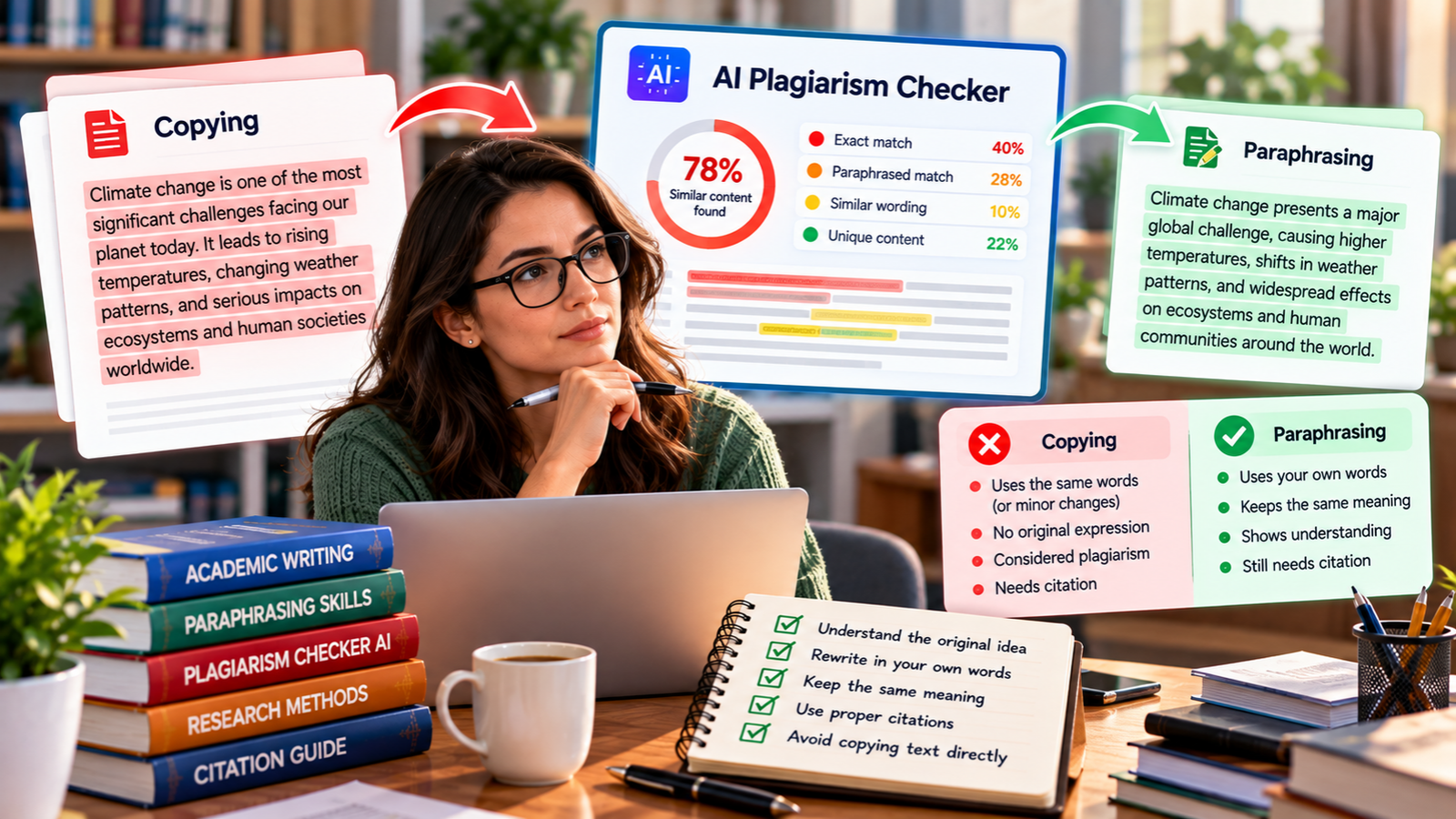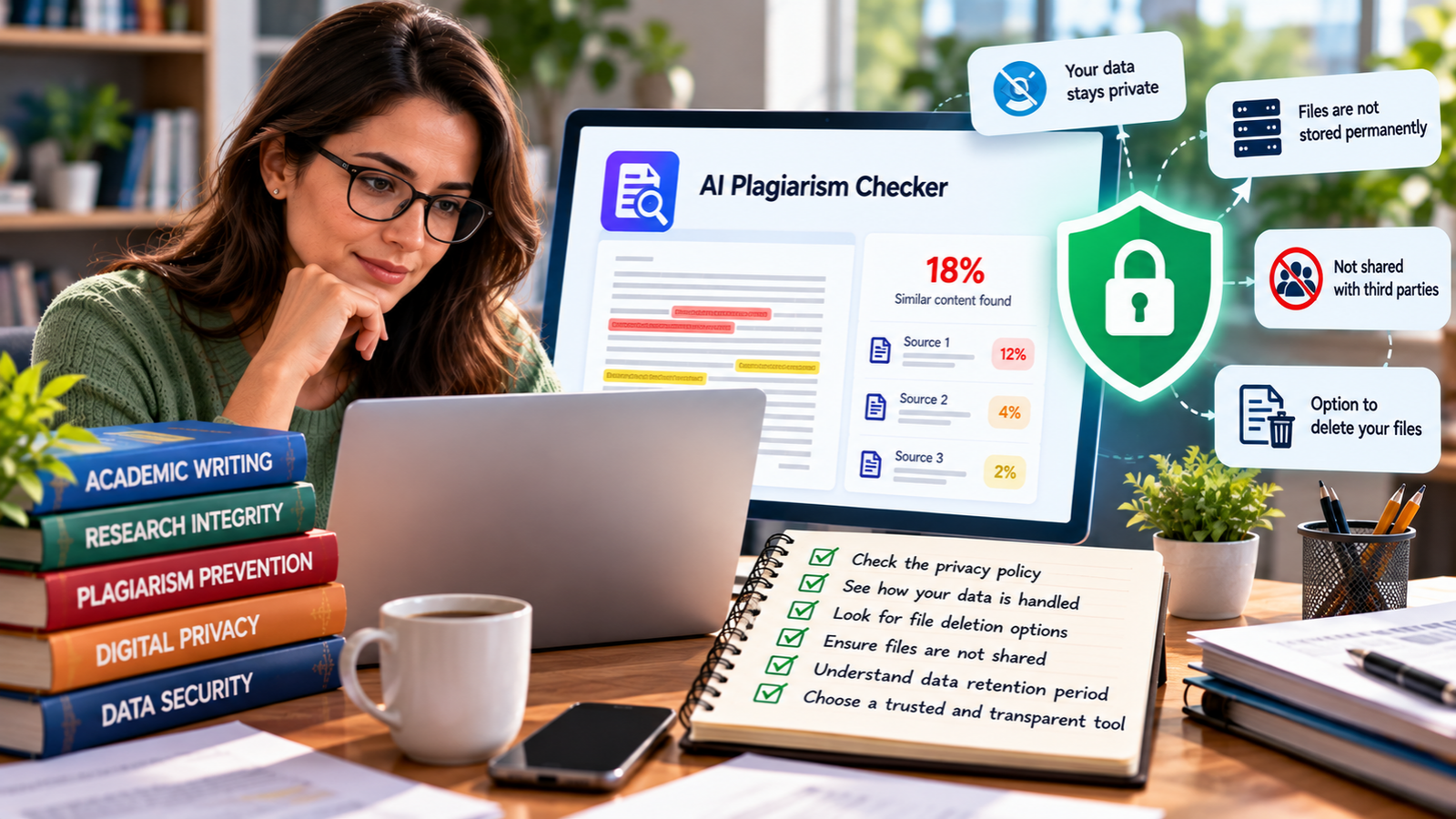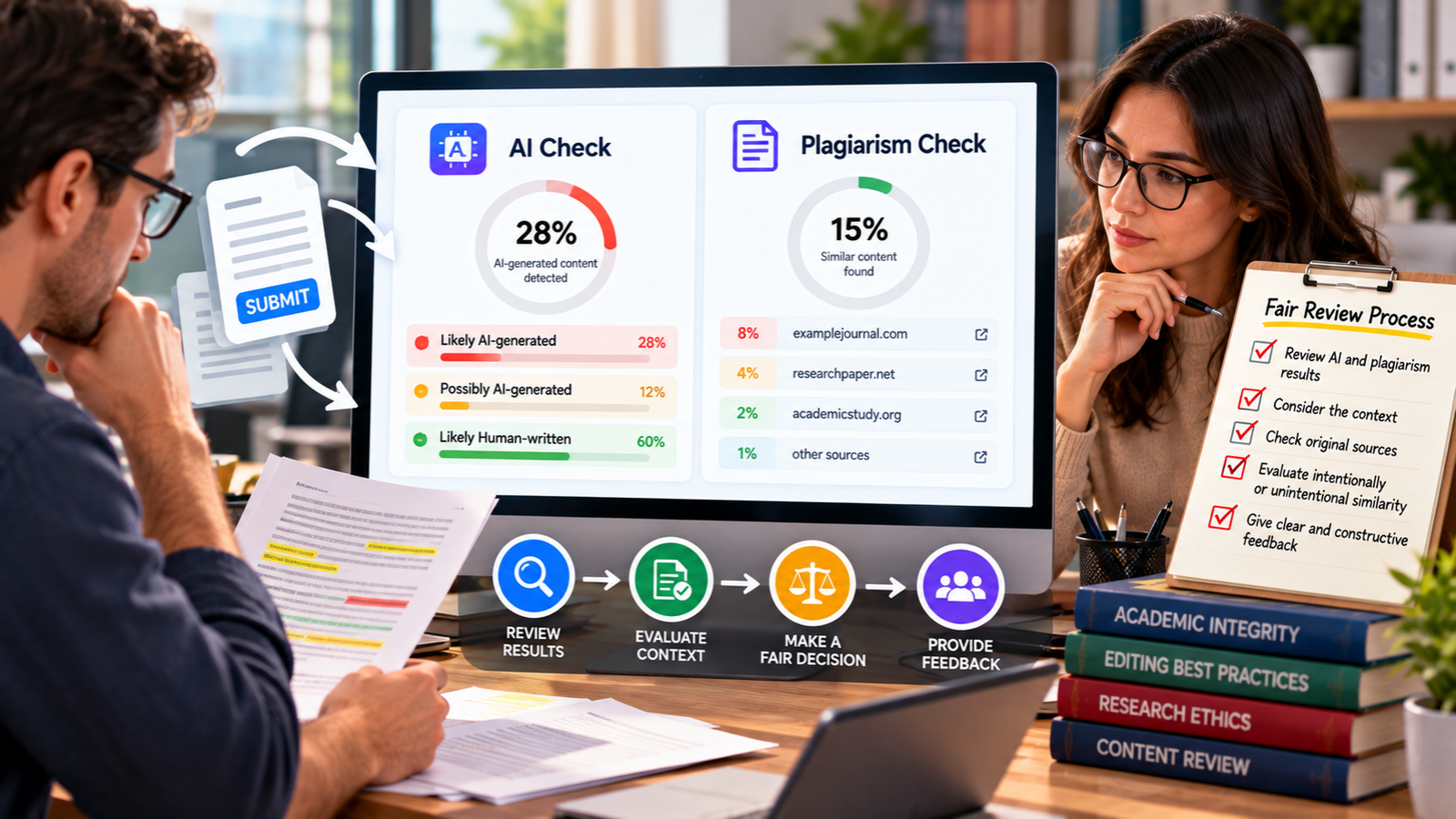
A plagiarism and AI checker is useful because modern writing workflows can involve both copied material and machine-assisted drafting. However, combining these checks does not eliminate the need for human judgment. Plagiarism detection examines relationships between text and sources, while AI detection looks for patterns linked to generated language. The safest workflow keeps those questions distinct, documents the evidence, and uses the combined results to guide review.
Start with the two questions
Before running any tool, define the questions you are trying to answer. For plagiarism, ask whether the writing closely matches another source and whether attribution is adequate. For AI detection, ask whether the text contains patterns associated with generated content. This simple separation prevents teams from treating a single label as an explanation for everything that looks unusual in a document.
Build an evidence-first review
A useful process starts with the original document and preserves its context. For each concern, capture the matched source or AI-detection result, the relevant passage, and why it matters. Reviewers can then distinguish between direct copying, acceptable quotation, common language, AI-assisted editing, and unsupported factual claims. This creates a more defensible record than relying on a single score displayed on a dashboard.
How teachers can reduce false accusations
Teachers should avoid assuming that an AI signal proves misuse. Assignment design can help by requiring drafts, source annotations, reflections, oral explanations, or version history where appropriate. These artifacts provide evidence of the writing process. A detector can then be used as an additional prompt for review rather than the decisive test. The approach also reinforces learning goals instead of turning assessment into a race between detectors and writing tools.
How content teams can use the same idea
Publishers and marketing teams can use the workflow for quality assurance. A submission can be screened for source similarity, AI-pattern signals, and factual claims before publication. The reviewer can then decide which issues require revision, citation, or deeper verification. This is especially useful when a piece contains statistics, product claims, medical information, legal statements, or rapidly changing news.
What to document
For every high-stakes review, record the material checked, date of review, tool used, key findings, and source evidence. Note any uncertainty rather than forcing a binary label. A good system also makes it easy to revisit a result when new sources appear. That is the same evidence-first mindset used in fact checking: preserve the claim, preserve the evidence, explain the reasoning, and make the process auditable.
How to make combined checks easier to interpret
A useful workflow names each finding clearly: source similarity, possible AI involvement, citation quality, and factual support. Reviewers can then see which question each signal answers. Teams should also create a standard escalation rule for high-risk cases, such as reviewing the original source, checking document history, or involving a second reviewer.
Practical takeaway
The goal is consistency. A documented process helps different reviewers reach comparable conclusions even when the underlying tools produce uncertain signals. That is especially useful in schools, publishing teams, and organizations with multiple editors.
Conclusion
Technology can make verification faster, but it works best when users can still see the evidence that supports the conclusion. When using plagiarism and ai checker in a real workflow, keep the original material available, preserve the date of the check, and separate facts from interpretation. For source-based questions, prioritize documents, direct statements, original recordings, reputable reporting, and other evidence that can be inspected. For AI or plagiarism questions, remember that a detection signal answers a narrower question than factual verification. For social media and news, compare the exact wording of the claim with what the underlying source actually says. If evidence conflicts, document the conflict instead of hiding it. If evidence is missing, use an uncertain status rather than inventing confidence. This approach makes plagiarism and ai checker more than a one-click answer: it becomes part of a transparent verification process that readers, editors, teachers, and content teams can understand and repeat. The ultimate goal is not simply to produce a verdict. It is to reduce avoidable errors, slow the spread of unsupported claims, and help people make decisions using evidence that is clear, traceable, and appropriate to the situation.
Frequently Asked Questions
Is a free AI plagiarism checker enough for high-stakes decisions?
A free tool can be useful for preliminary screening, but high-stakes decisions should use broader evidence and a clearly documented review process.
What should a teacher do after an AI flag?
Treat the result as a prompt for investigation. Review the student’s drafts, sources, assignment context, and other available evidence before reaching a conclusion.