A plagiarism AI checker is often marketed as a way to identify suspicious writing, but modern writing is more nuanced than a simple human-versus-AI split. People may brainstorm with AI, rewrite a paragraph, translate a draft, or use a grammar assistant without copying anyone. A useful review process therefore examines source similarity, AI signals, and factual accuracy as separate dimensions.
Plagiarism still depends on attribution
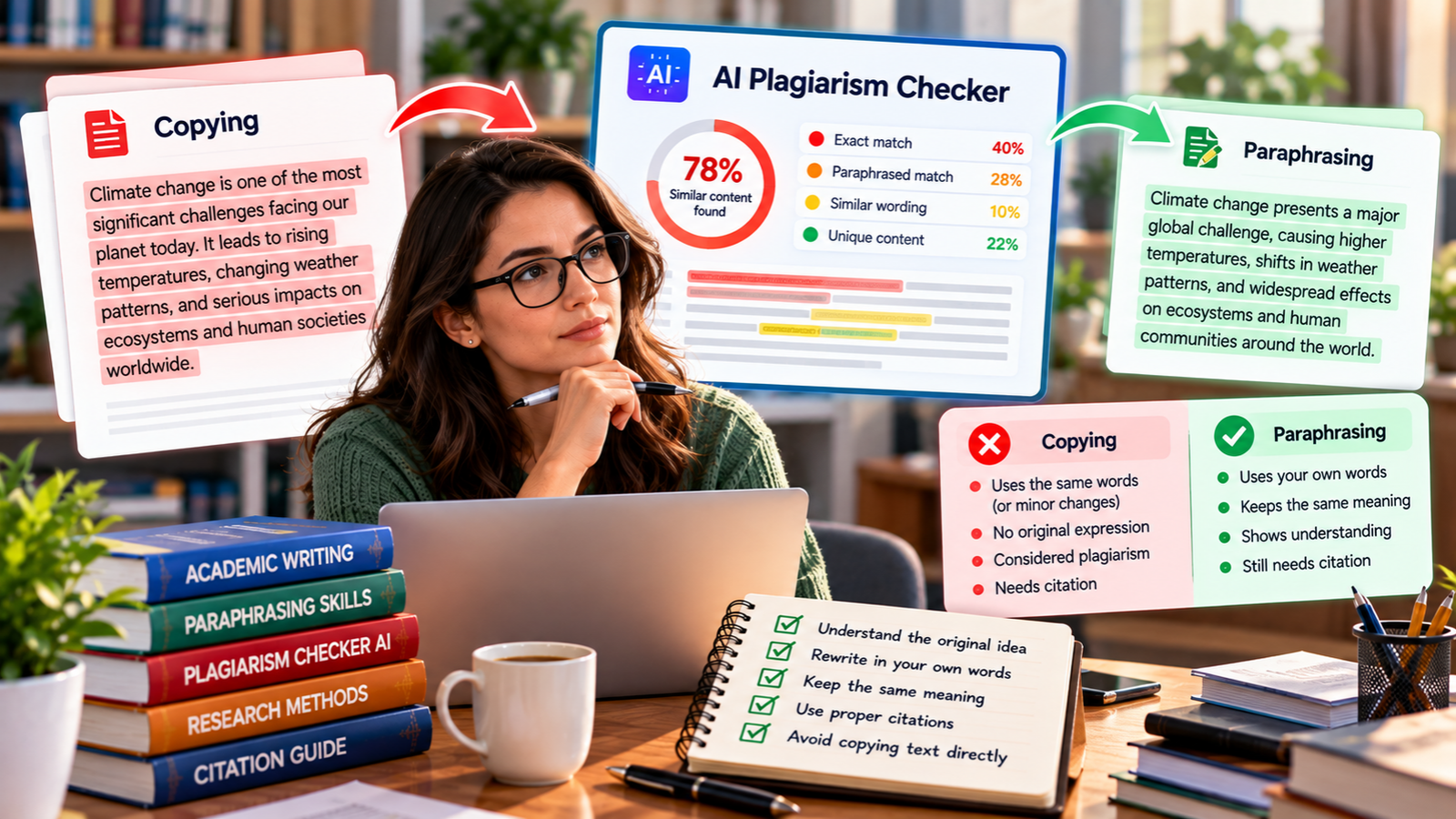
Plagiarism is fundamentally about presenting another source’s work or wording without appropriate attribution. AI does not change that principle. A document may contain no AI involvement and still require correction because it copied a source. Conversely, an AI-generated paragraph may be newly phrased and still need citations if it contains ideas, facts, or quotations derived from identifiable sources.
AI-assisted writing is broader than AI generation
Many people use AI as an editor, brainstorming partner, translator, or drafting assistant. A detector may not distinguish these modes reliably. That is why organizations should define allowed uses rather than relying entirely on detection technology. Policies that recognize different types of assistance are usually easier to apply consistently than policies based only on a detector threshold.
Factual accuracy is a third question
Even original human writing can contain misinformation, and AI-generated writing can sometimes repeat true information. A plagiarism AI checker cannot prove that a claim is accurate. Critical claims should be checked against primary documents, reputable reporting, official data, and established fact-checking sources when appropriate.
Use layered review for higher-risk material
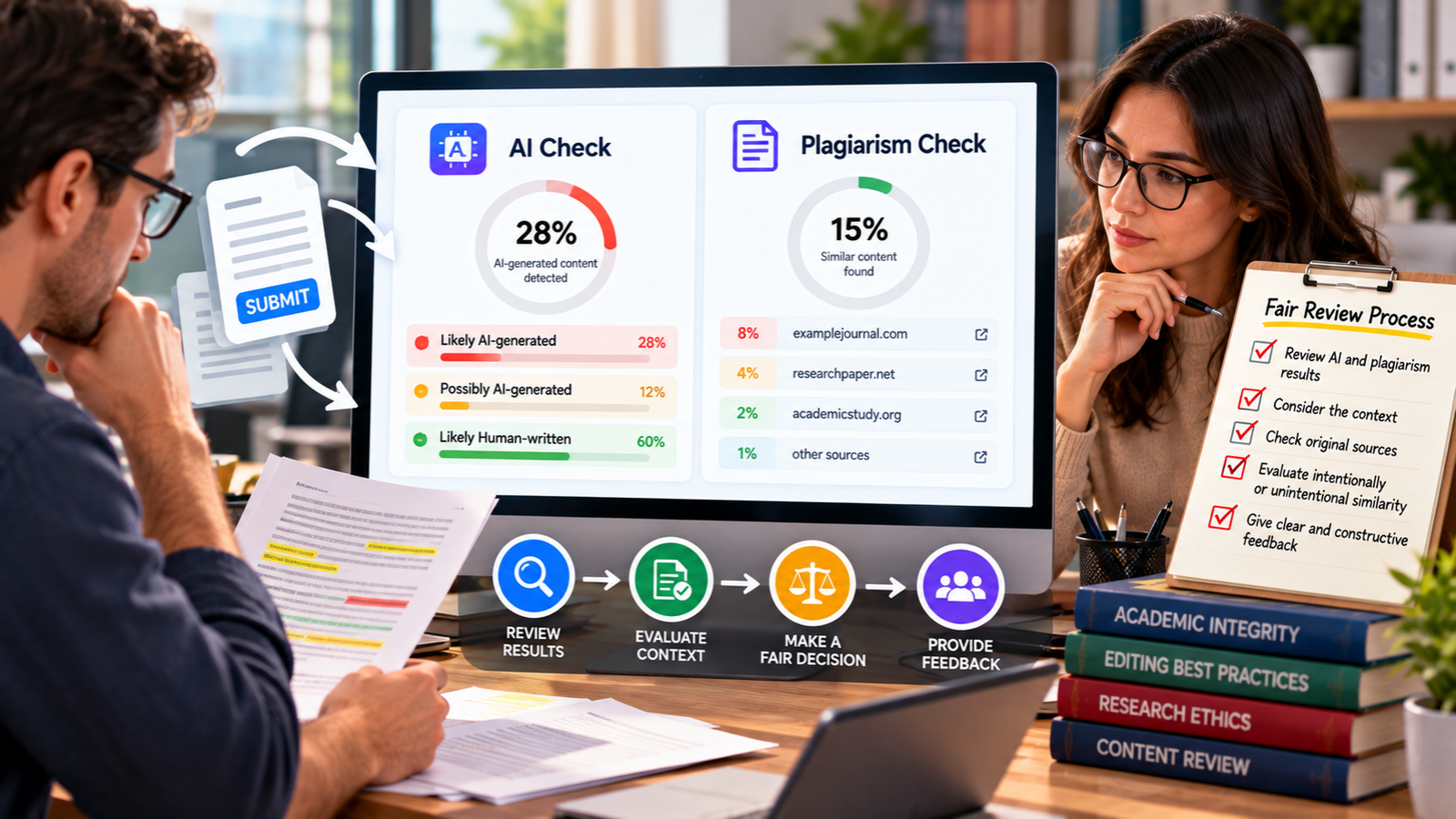
A layered review can begin with source similarity, followed by AI-pattern screening, then factual verification of the highest-risk claims. The sequence can be adjusted to the workflow. The important point is that each tool produces a different kind of evidence. Combining them should increase clarity, not blur the boundaries between concepts.
Make the outcome auditable
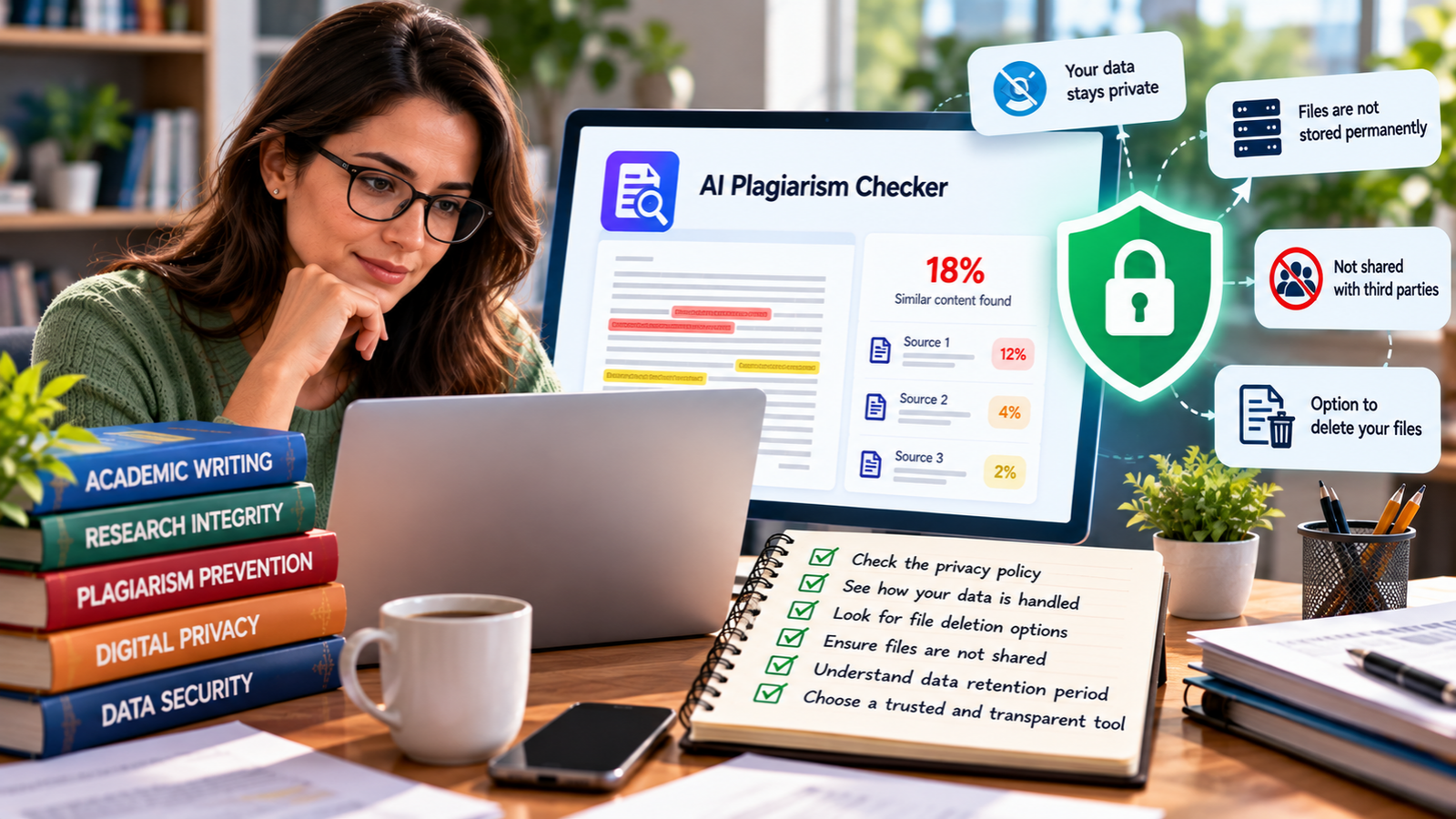
Document the passages reviewed, the sources consulted, and the reason a reviewer reached the final conclusion. If the evidence remains mixed, record that uncertainty. An auditable process is particularly valuable in education and professional publishing because it lets another reviewer understand what was checked rather than relying on a screenshot of a score.
How AI-assisted writing changes the review process
Modern writing can include drafting, paraphrasing, translation, and editing assistance without fitting neatly into a human-versus-AI category. Reviewers should therefore avoid binary assumptions. Ask what role AI played, what sources were used, and whether the final document follows the applicable policy. This creates a more meaningful review than a single classification.
Practical takeaway
A plagiarism AI checker is most valuable when it helps focus attention on passages that need evidence, attribution, or policy review. It should support a transparent process rather than define originality by itself.
Conclusion
The strongest workflow is evidence-first: gather the relevant material, inspect the sources, and then communicate the result clearly. When using plagiarism ai checker in a real workflow, keep the original material available, preserve the date of the check, and separate facts from interpretation. For source-based questions, prioritize documents, direct statements, original recordings, reputable reporting, and other evidence that can be inspected. For AI or plagiarism questions, remember that a detection signal answers a narrower question than factual verification. For social media and news, compare the exact wording of the claim with what the underlying source actually says. If evidence conflicts, document the conflict instead of hiding it. If evidence is missing, use an uncertain status rather than inventing confidence. This approach makes plagiarism ai checker more than a one-click answer: it becomes part of a transparent verification process that readers, editors, teachers, and content teams can understand and repeat. The ultimate goal is not simply to produce a verdict. It is to reduce avoidable errors, slow the spread of unsupported claims, and help people make decisions using evidence that is clear, traceable, and appropriate to the situation.
Frequently Asked Questions
Does a plagiarism AI checker detect all types of plagiarism?
No. Coverage depends on the tool, indexed sources, and the type of reuse. Manual source review remains important.
Can AI help people plagiarize?
AI can make it easier to paraphrase or reorganize material, but that does not make the resulting text automatically original or ethically acceptable. Attribution and source use still matter.