A news verification tool can make the research process faster, but the core questions remain human and evidence-based. Who published this? What exactly is being claimed? What evidence exists? Is the source original? Has the information changed? A strong checklist prevents users from being persuaded by a polished interface or a confident headline.
Verify the publisher and page
Check the publication name, URL, author, date, and page structure. Watch for copycat domains, screenshots without URLs, and posts that quote unnamed “reports” without linking to them. These checks do not prove a story false, but they establish whether the source itself deserves investigation.
Check the exact claim
Rewrite the headline as one or more statements that can be tested. This prevents a vague impression from becoming the object of the investigation. A single article may contain factual statements, interpretations, predictions, and opinions, and each category should be treated differently.
Trace evidence to the origin
Follow citations, quotations, and embedded posts to the earliest traceable source. When several articles cite one another, identify the underlying report. A verification tool that exposes source URLs and publication dates helps make this chain visible.
Verify media and context
For images, check whether the visual belongs to the event described. For video, inspect the actual footage and context. For screenshots, locate the original page. Misleading content often uses authentic media with false labels, so “real image” and “true story” cannot be treated as the same conclusion.
Keep an audit trail
Save the sources and findings that mattered. This is particularly useful for stories that continue evolving. When new evidence appears, you can revisit the previous conclusion and update it instead of repeating the entire investigation from scratch.
Use verification as a checklist, not a button
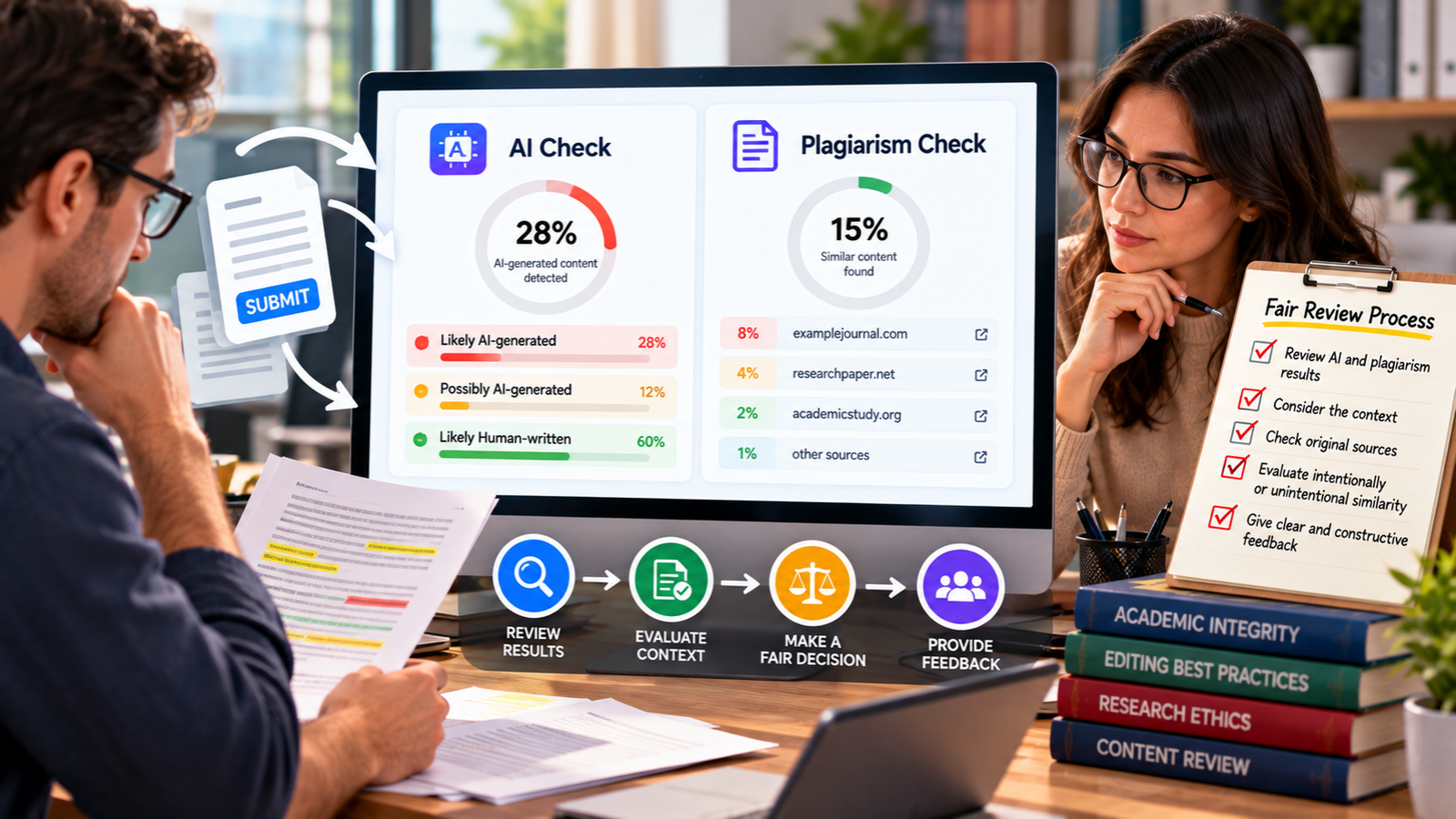
A news verification tool is most useful when it organizes a checklist: identify the publisher, isolate the claim, locate primary evidence, compare independent reports, inspect media, verify dates, and save the findings. A button that returns a label without these layers gives users less visibility into the reasoning.
Practical takeaway
The stronger the evidence chain, the easier it is to explain and update the conclusion. That is the foundation of reliable online verification.
Conclusion
A careful review protects against two opposite mistakes: accepting a weak claim too quickly and rejecting a true claim because it looks unusual. When using news verification tool in a real workflow, keep the original material available, preserve the date of the check, and separate facts from interpretation. For source-based questions, prioritize documents, direct statements, original recordings, reputable reporting, and other evidence that can be inspected. For AI or plagiarism questions, remember that a detection signal answers a narrower question than factual verification. For social media and news, compare the exact wording of the claim with what the underlying source actually says. If evidence conflicts, document the conflict instead of hiding it. If evidence is missing, use an uncertain status rather than inventing confidence. This approach makes news verification tool more than a one-click answer: it becomes part of a transparent verification process that readers, editors, teachers, and content teams can understand and repeat. The ultimate goal is not simply to produce a verdict. It is to reduce avoidable errors, slow the spread of unsupported claims, and help people make decisions using evidence that is clear, traceable, and appropriate to the situation.
Frequently Asked Questions
What makes a news verification tool useful?
It should help users inspect the source, gather independent evidence, verify links and media, and understand why the result was reached.
Why is the audit trail important?
Because news can change. Saving the evidence and dates makes it possible to understand what was known at the time and to update the conclusion later.