Fake news is a broad phrase often used for fabricated stories, but online misinformation comes in many forms. A post can be completely invented, built from a real event with a false caption, or based on a genuine source that is presented without crucial context. The safest response is not to label everything suspicious as fake. Instead, check the underlying claim and the evidence behind it.
Look at the source
Start with the publication, account, or page. Check its name, URL, author information, and history. Be alert when a page imitates a well-known outlet or uses a domain that looks almost correct. Source inspection is not proof of falsehood, but it can reveal warning signs that justify deeper checking.
Read beyond the headline
Sensational headlines are often copied, exaggerated, or written to provoke an immediate reaction. Open the article and compare the headline with the body. Check whether the key statement is supported by quotes, documents, data, or links. A headline that says more than the article can be a sign of distortion.
Check dates and images
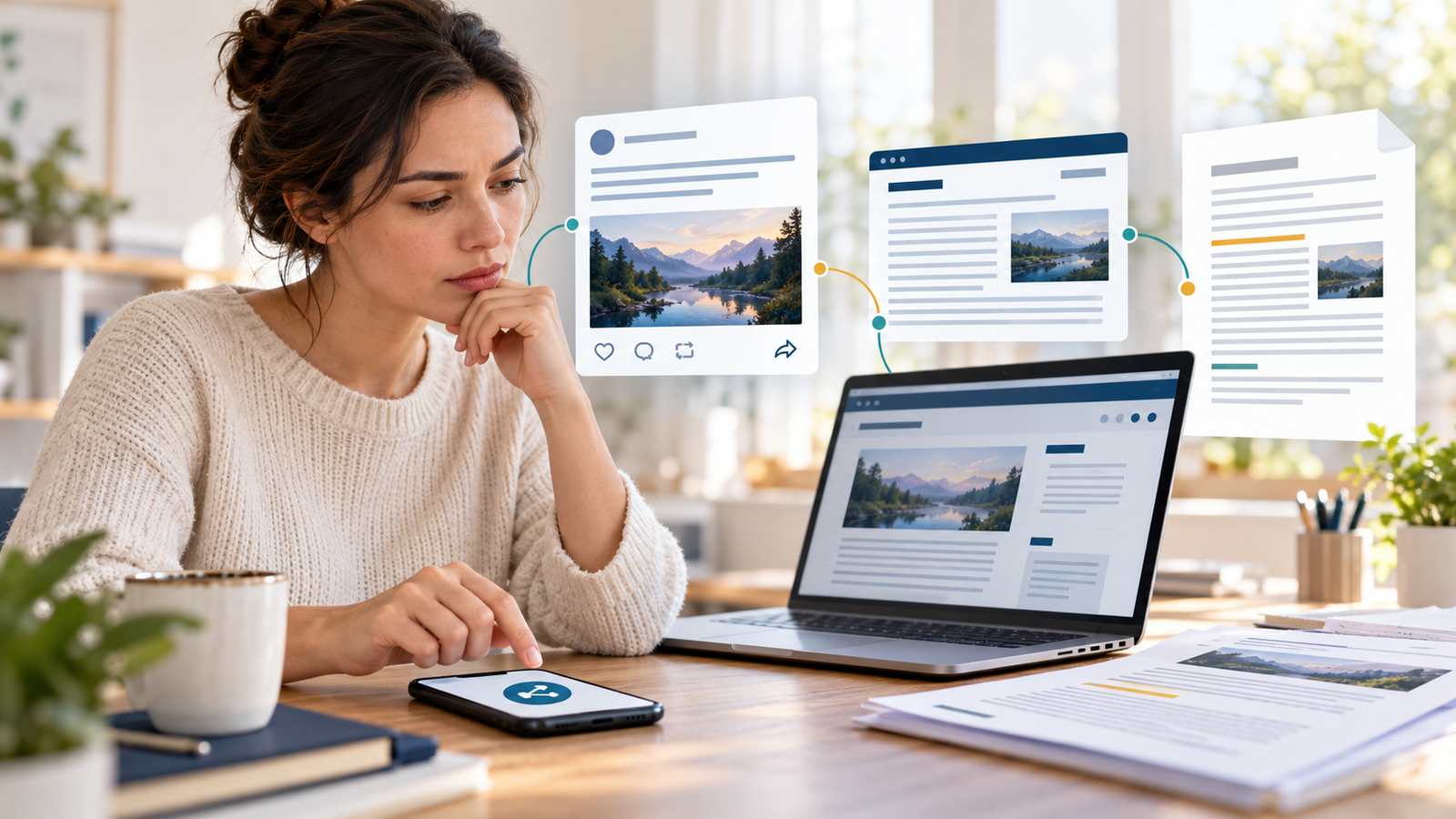
Old stories and images are frequently recycled with new captions. Reverse-search tools and image verification can help, but even a basic date check can expose a mismatch. For videos, look for the original upload and context. A genuine image from the wrong event can still create a false narrative.
Use a fake news checker strategically
A fake news checker can accelerate the process by searching for corroborating reporting, checking URLs, and finding existing professional reviews. Use it to gather evidence rather than simply to confirm what you already believe. The strongest check compares the exact claim with independent sources.
Pause before sharing
The easiest misinformation to correct is the misinformation you never share. When a story triggers anger, fear, or excitement, pause and verify the central claim before forwarding it. A few minutes of careful checking can prevent a false statement from reaching dozens of people and creating more work for everyone later.
Fake news often starts with something real
Misleading content frequently reuses genuine photographs, old articles, authentic quotes, or real statistics and places them in a false context. That is why simply asking whether an image or website is “real” is not enough. Verify what the material depicts, when it was created, and whether it supports the current claim.
Practical takeaway
The safest habit is to check the relationship between the source and the caption. A real source can still be used to tell a false story.
Conclusion
A careful review protects against two opposite mistakes: accepting a weak claim too quickly and rejecting a true claim because it looks unusual. When using fake news in a real workflow, keep the original material available, preserve the date of the check, and separate facts from interpretation. For source-based questions, prioritize documents, direct statements, original recordings, reputable reporting, and other evidence that can be inspected. For AI or plagiarism questions, remember that a detection signal answers a narrower question than factual verification. For social media and news, compare the exact wording of the claim with what the underlying source actually says. If evidence conflicts, document the conflict instead of hiding it. If evidence is missing, use an uncertain status rather than inventing confidence. This approach makes fake news more than a one-click answer: it becomes part of a transparent verification process that readers, editors, teachers, and content teams can understand and repeat. The ultimate goal is not simply to produce a verdict. It is to reduce avoidable errors, slow the spread of unsupported claims, and help people make decisions using evidence that is clear, traceable, and appropriate to the situation.
Frequently Asked Questions
Is every inaccurate article fake news?
Not necessarily. Errors, outdated information, satire, opinion, and deliberate fabrication are different categories and should not be treated as identical.
What is the fastest first check?
Open the original source, verify the date and exact claim, then search for independent reporting or an existing professional fact check.