The phrase AI plagiarism checker can describe several different capabilities, which is why users often get confused about what a tool actually detects. Traditional plagiarism checking searches for similarity with existing sources, while AI detection estimates whether wording resembles machine-generated text. These are related quality checks, but they answer different questions. Understanding the distinction helps teachers, editors, marketers, and researchers choose the right workflow.
What traditional plagiarism checking does
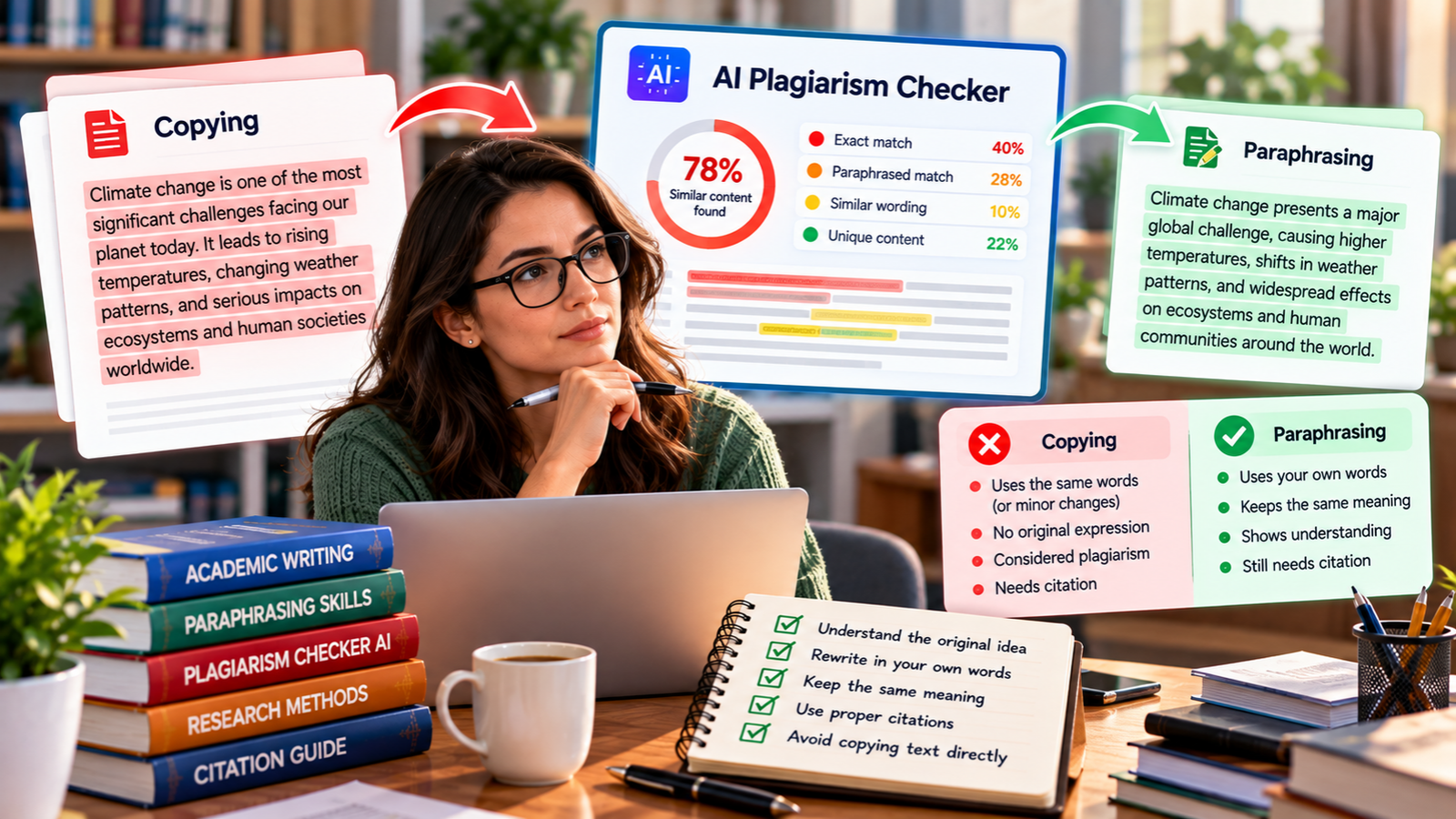
Traditional plagiarism detection focuses on overlap or close similarity between submitted text and indexed sources. It can identify copied passages, reused wording, missing quotation marks, or paraphrases that remain unusually close to the original. A similarity match is not automatically proof of misconduct; common phrases, properly quoted material, and widely used definitions can generate matches too. Human review remains important for understanding why the similarity occurred.
What an AI plagiarism checker adds
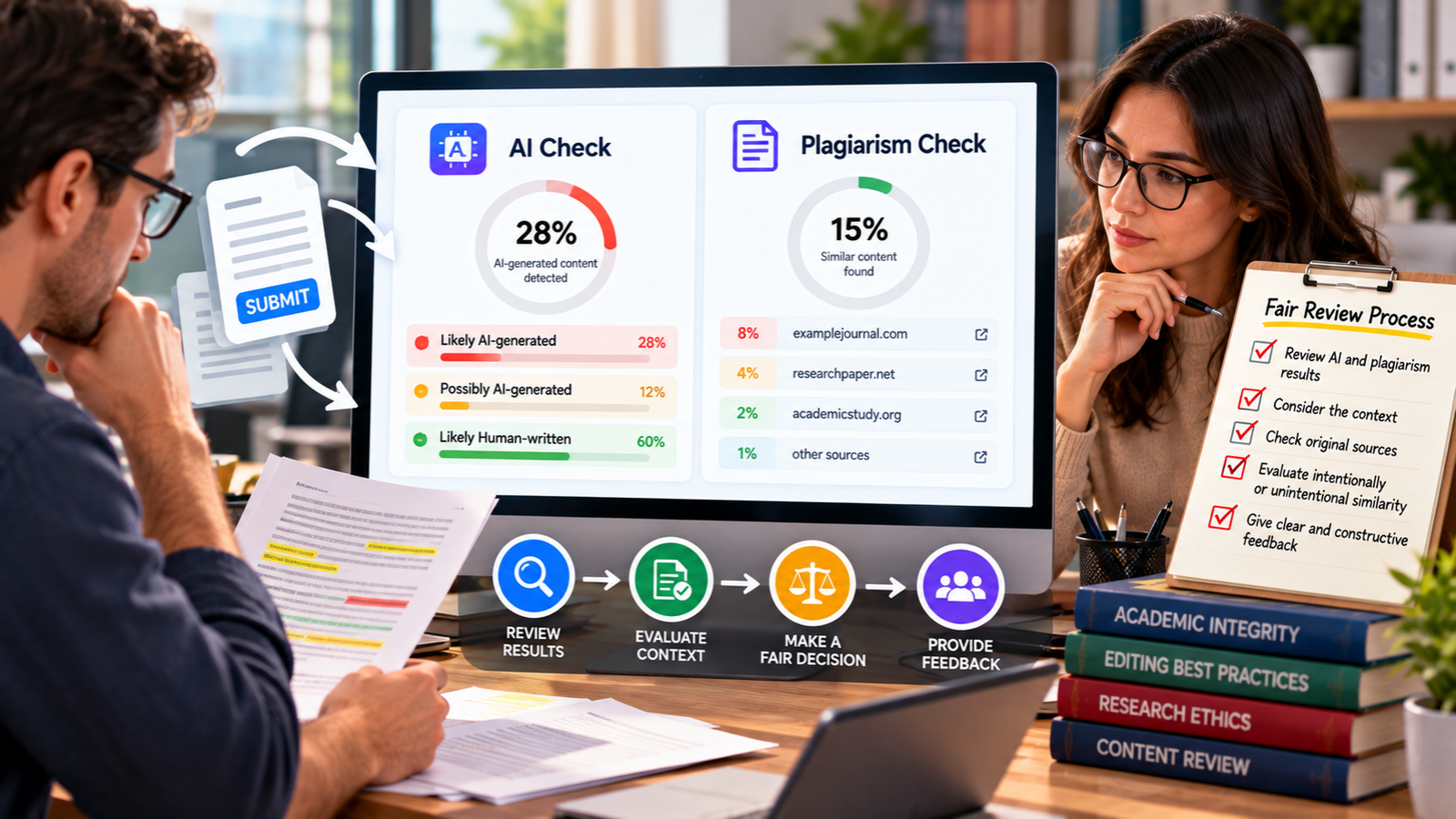
A tool marketed as an AI plagiarism checker may combine similarity detection with an AI detector. The AI component asks whether the writing style or statistical pattern resembles generated text, while the plagiarism component asks whether the wording resembles existing sources. Those outputs should remain separate in the interface because “copied from a source” and “generated by a model” are not equivalent findings.
Why AI-generated does not mean plagiarized
Generative AI can create original wording that is not directly copied from a source, while a person can plagiarize without using AI. That means an AI-generated flag cannot substitute for a plagiarism finding. A sound review process examines source similarity independently, checks citations, and then considers AI-generation signals as an additional piece of evidence when relevant.
Using plagiarism checker AI tools in education
Teachers often need to protect academic integrity while recognizing that students may use writing tools in different ways. A balanced workflow can use plagiarism checker AI capabilities as a screening layer, then review the document, sources, draft history, and assignment context. Clear classroom rules are helpful too, because students should know what forms of AI assistance are permitted and what evidence may be reviewed.
Choosing a useful combined workflow
When comparing tools, look for separate reporting on similarity and AI detection, transparent explanations, source links, and controls that let reviewers inspect evidence. The goal is not to find a magic percentage. The goal is to understand what the system observed and whether that observation is strong enough to justify further investigation. In higher-stakes cases, use the tool to prioritize review rather than to automate the final judgment.
Questions to ask before using an AI plagiarism checker
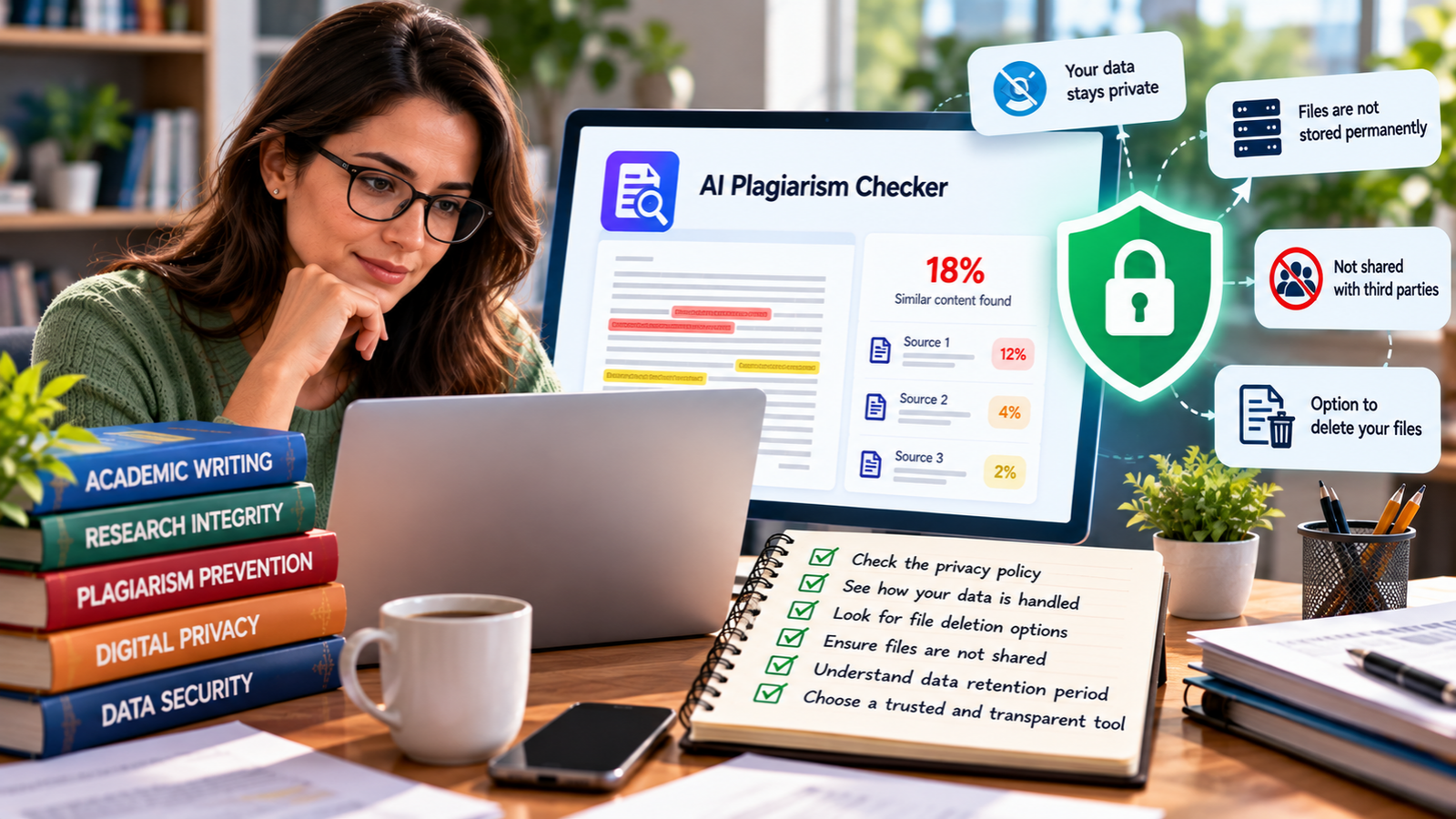
Check whether the product distinguishes similarity from AI detection, shows matched sources, and explains what was analyzed. Consider file limits and privacy terms too. A tool that produces a polished dashboard but cannot show the evidence behind a flag may be difficult to use responsibly. The report should help an editor or teacher investigate a passage rather than merely display a number.
Practical takeaway
Use separate evidence lanes for source similarity and AI signals. When the two point in the same direction, investigate further; when they disagree, do not force a single explanation. The distinction protects the integrity of the review.
Conclusion
The strongest workflow is evidence-first: gather the relevant material, inspect the sources, and then communicate the result clearly. When using ai plagiarism checker in a real workflow, keep the original material available, preserve the date of the check, and separate facts from interpretation. For source-based questions, prioritize documents, direct statements, original recordings, reputable reporting, and other evidence that can be inspected. For AI or plagiarism questions, remember that a detection signal answers a narrower question than factual verification. For social media and news, compare the exact wording of the claim with what the underlying source actually says. If evidence conflicts, document the conflict instead of hiding it. If evidence is missing, use an uncertain status rather than inventing confidence. This approach makes ai plagiarism checker more than a one-click answer: it becomes part of a transparent verification process that readers, editors, teachers, and content teams can understand and repeat. The ultimate goal is not simply to produce a verdict. It is to reduce avoidable errors, slow the spread of unsupported claims, and help people make decisions using evidence that is clear, traceable, and appropriate to the situation.
Frequently Asked Questions
Does an AI plagiarism checker replace a normal plagiarism checker?
Not necessarily. Some products combine both functions, but their coverage and methods can differ. Check whether the product separately reports source similarity and AI-detection signals.
Can AI-generated text be plagiarism-free?
Yes. AI-generated wording is not automatically copied from a source. Plagiarism is a separate question that requires source and attribution analysis.