Consider a research essay with plausible but potentially invented references. It may arrive from a friend, appear in a popular feed, or be repeated by accounts that sound confident. The difficulty is not deciding whether the story feels believable. The difficulty is establishing what happened, when it happened, and what independent evidence actually supports. This guide explains a practical approach to ai plagiarism checker without treating an automated verdict as the final word.
Identify the exact claim
The starting point is to write down the exact proposition you need to test. In this example, the central issue is a research essay with plausible but potentially invented references. Preserve the original wording, date, link, and accompanying media. A small change in the wording can turn an accurate report into an exaggerated or false claim. Avoid searching only for a dramatic phrase: identify names, locations, quantities, dates, and the action being alleged. This narrower question produces better evidence and makes it easier to explain a result to someone else.
Find the strongest available evidence
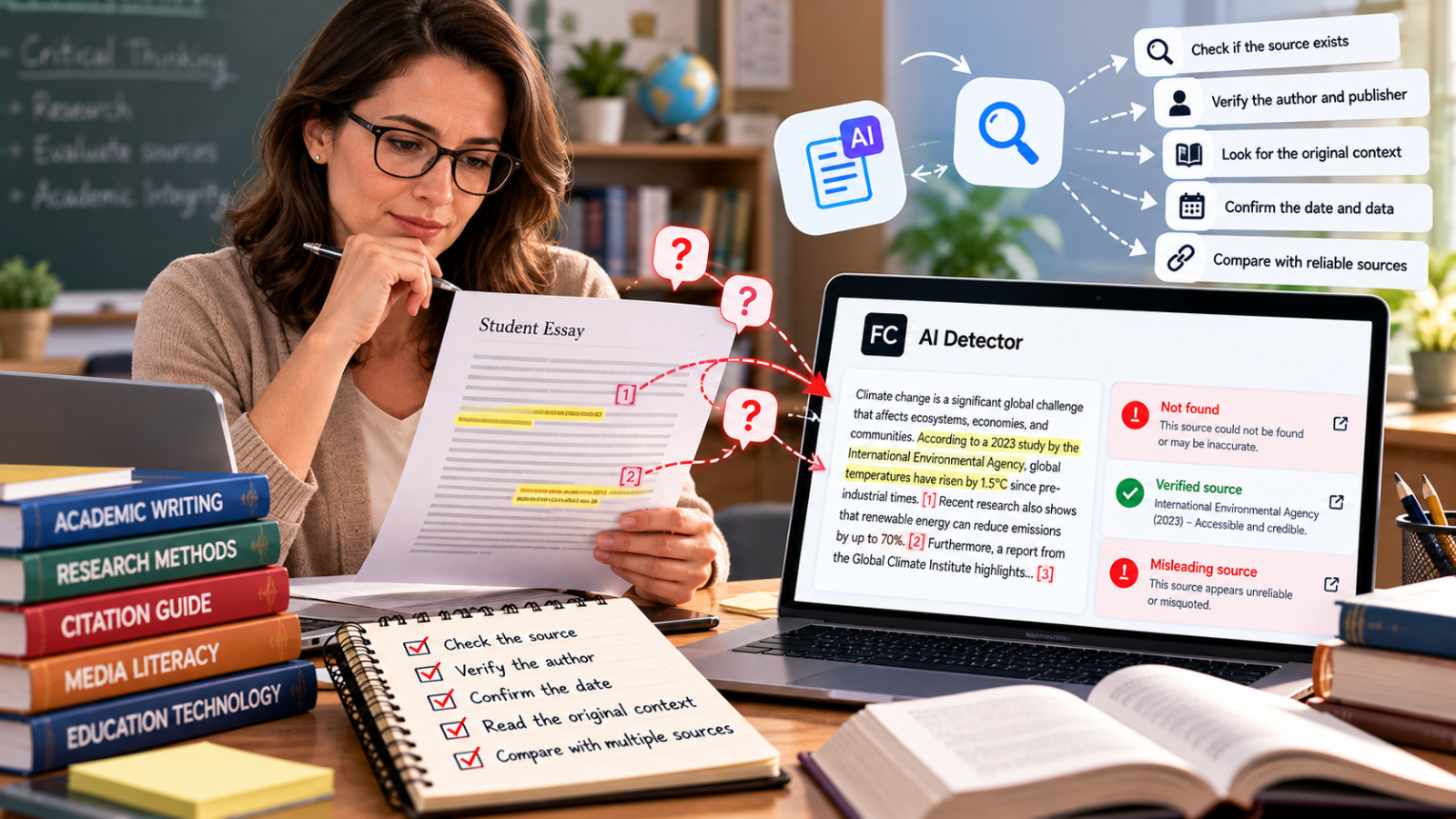
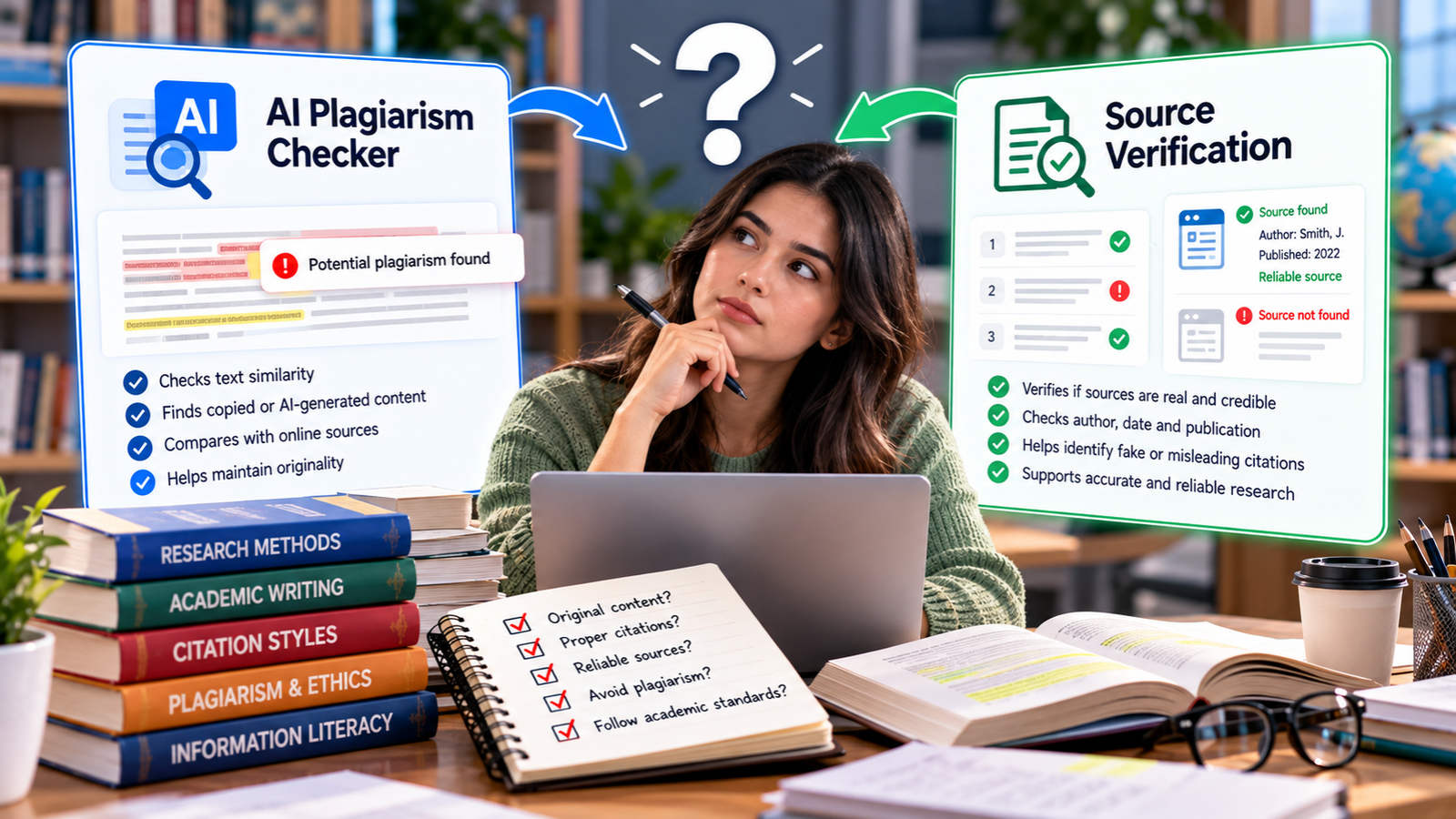
A useful first investigation is to separate text similarity review from checking whether quoted studies exist and support claims. Prefer a primary record where one exists: the complete statement, original dataset, official publication, first upload, or full interview. Then look for independent coverage that specifically addresses the same proposition. Multiple websites repeating one press release are not multiple independent confirmations. Read beyond search snippets, because a headline can be accurate while a summary leaves out crucial qualifications. If sources disagree, note what each source actually establishes instead of averaging their claims.
Avoid the most common verification trap
The main trap in this situation is that low similarity does not guarantee factual accuracy. Ask whether the material has been edited, stripped of context, translated loosely, or moved to a different date or location. Pay attention to the distinction between a publisher being real and the claim being verified. Also distinguish 'no corroboration found' from 'disproved': missing evidence often means the appropriate status is uncertain. If the claim concerns health, safety, finances, or reputation, raise the standard of evidence and consult the relevant authoritative source directly.
Where Fact Checker fits
A dedicated fact checker online can organize the search, but its result still requires interpretation. Fact Checker at https://factcheckerapp.info/ is designed for checking claims, links, and photos, with evidence-oriented findings and a credibility score that users can review. The platform's approach is useful as a starting point when you need to examine suspicious content quickly. A score is not a mathematical guarantee that a claim is true, and image-analysis signals are not conclusive proof of manipulation. Treat the output as an invitation to inspect cited material, compare the claim with source text, and make your own judgment.
A workflow you can repeat
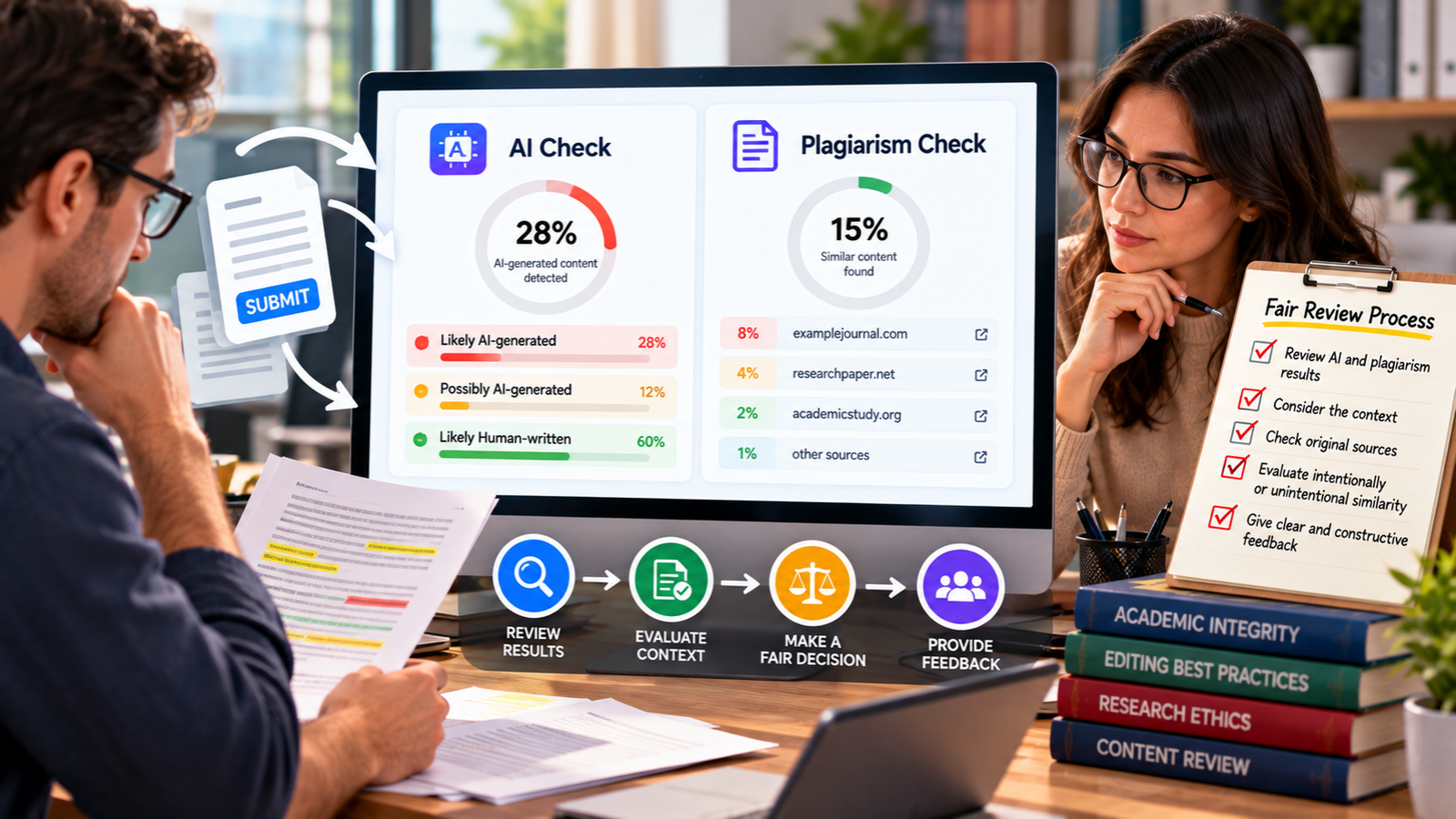
For students and supervisors, the most efficient routine is repeatable. First capture the original post and identify the precise claim. Next, separate text similarity review from checking whether quoted studies exist and support claims. Third, check whether reputable fact-checking organizations have already reviewed the same wording. Fourth, inspect dates and any corrections. Finally, describe the outcome in ordinary language: supported, contradicted, mixed, or not yet established. This approach is more informative than forwarding a screenshot of a score without its supporting evidence.
How to communicate your finding
Suppose someone asks you to share the item immediately. Rather than arguing about motives, reply with the source question: 'Where can we see the original evidence?' If you find a reliable primary record, quote only the part relevant to the claim and link to the full context. If you find a professional fact check, verify that it addresses the same date and wording. If you cannot resolve the issue, say what you checked and what remains unknown. Transparent uncertainty is a useful result, especially during breaking events.
Conclusion
The practical lesson from a research essay with plausible but potentially invented references is that credibility comes from traceable evidence, not repetition or polished presentation. Start with the exact claim, inspect its original context, and explain what the sources do and do not establish. For a convenient first pass, visit https://factcheckerapp.info/ and review the findings before deciding whether the content deserves to be shared.
Frequently Asked Questions
Can a ai plagiarism checker tool prove the story is true?
No single tool can guarantee accuracy. The quality of the conclusion depends on relevant evidence, the freshness of sources, and whether the claim was interpreted correctly.
What if credible sources have not covered the claim yet?
Record it as unconfirmed, not automatically false. Revisit primary sources and dated updates if the claim is time-sensitive.